
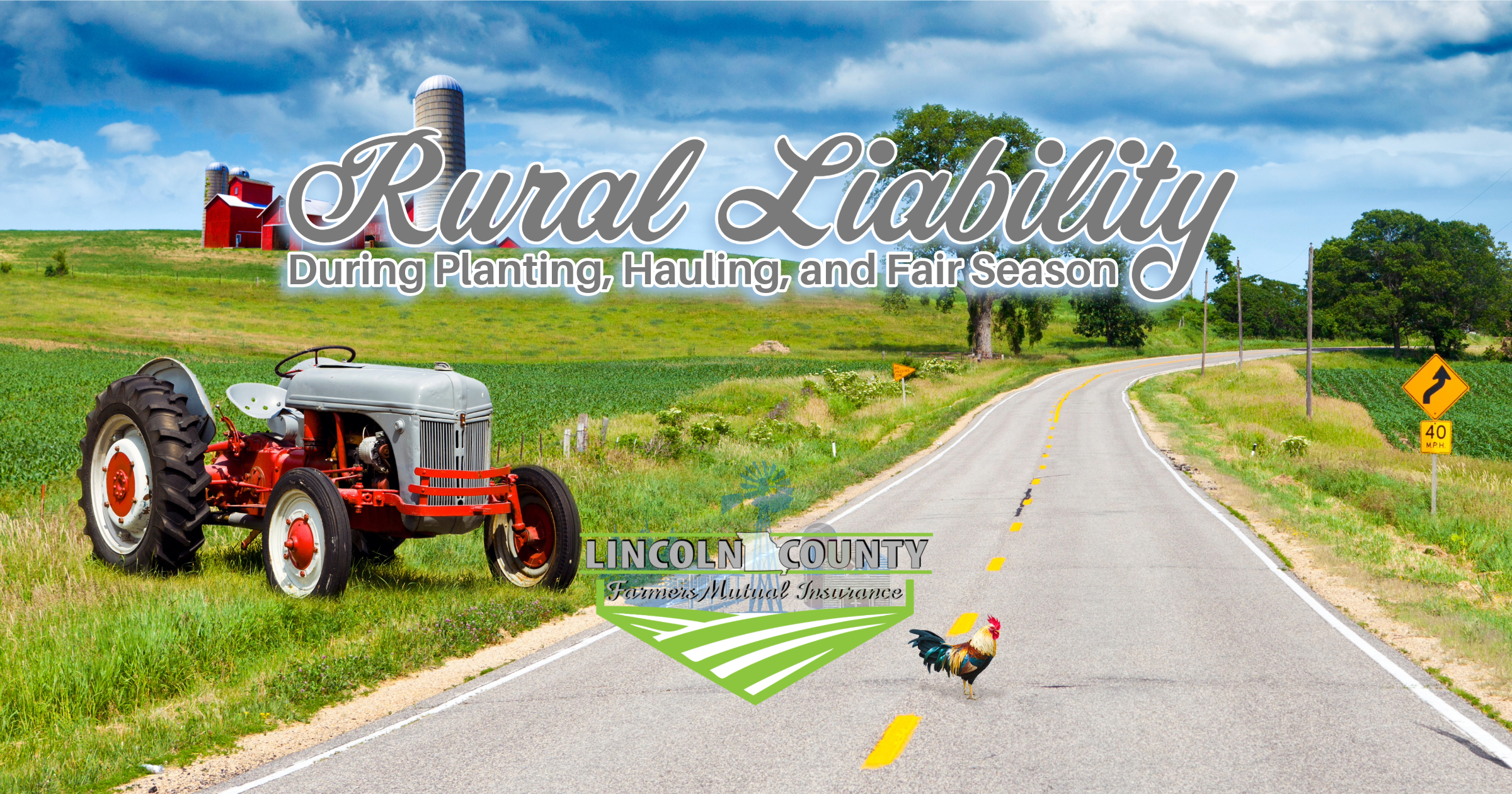
Across Missouri, this time of year means movement.
Tractors begin traveling field to field before sunrise. Livestock trailers head toward fairs and shows. Hay equipment appears on county roads again. Gates open and close more often. Temporary pens go up. Fence lines are tested. Long days turn into tired evenings.
For rural communities, this is simply life. But it is also one of the seasons where liability risks quietly increase. Not because people are careless, but because things get busy. And in agriculture, small oversights can become very large problems very quickly.
A worn trailer tire. A weak latch. A missing slow-moving vehicle emblem.
A distracted driver approaching farm equipment too fast.
A section of fencing that should have been repaired two weeks ago.
Rural liability often starts long before the accident itself.
“Who is responsible if I hit a cow on the road in Missouri?”
This is one of the most commonly searched rural liability questions online.
Missouri is no longer considered a free-range state, and livestock owners are expected to maintain reasonable fencing and containment for their animals. If livestock escapes onto a roadway and causes an accident, liability may depend on whether negligence played a role.
That investigation may include questions like:
- Was the fencing properly maintained?
- Was a gate secured correctly?
- Had previous escape issues been reported?
- Was the animal being transported appropriately?
- Did weather, visibility, or roadway conditions contribute?
- Was the driver operating safely and attentively?
Every accident is different, and liability is rarely determined by a single detail alone. That is why preparation matters before transportation and movement season ramps up.
“Am I liable if farm equipment causes an accident on the roadway?”
Potentially, yes. Missouri roadways are shared by everyone, including agricultural vehicles moving between properties and fields.
Drivers approaching large farm equipment often underestimate:
- how wide implements actually are
- how long it takes equipment to accelerate
- stopping distance
- blind spots
- how difficult it can be for machinery to safely pull aside
At the same time, equipment operators also carry responsibility for operating safely on public roadways. Lighting, reflectors, escort vehicles when appropriate, visibility markings, and properly displayed slow-moving vehicle emblems all matter. Patience from the traveling public matters, too. A combine cannot maneuver like a pickup truck. A tractor towing equipment cannot stop on a dime. And a loaded livestock trailer behaves very differently than a passenger vehicle. Shared roads require shared awareness.
“Does my insurance cover livestock during transport?”
Possibly, depending on the policy and circumstances involved. Coverage questions involving transported livestock, trailers, borrowed equipment, and liability exposures can become very specific very quickly. That is why generic online insurance purchasing often leaves dangerous gaps that people never knew existed.
A local independent insurance agent can ask the questions a website never will:
- Are animals being hauled across county lines?
- Is equipment personally owned or borrowed?
- Is the trailer properly insured?
- Is the operation a hobby farm, commercial farm, or mixed-use?
- Are youth livestock shows and fairs involved?
- Are multiple drivers transporting equipment?
Those details matter because rural life does not fit neatly inside a standardized online quote form.
Before You Move Equipment or Livestock, Check the Small Things
The most expensive claims are often connected to simple things that were easy to overlook.
Before hauling livestock or moving equipment this season, it is worth checking:
- trailer tires and wheel bearings
- gate chains and latches
- brake lights and signals
- trailer floor condition
- hitch connections and safety chains
- fencing and temporary holding pens
- slow-moving vehicle signage
- reflective markings and lighting
- load securement
- visibility near roadway entrances
None of those checks take very long, but every one of them can matter when liability enters the conversation later.
Rural Roads Are Different
In Missouri, rural roads are part of daily life. They connect farms, homes, livestock operations, fairs, feed stores, churches, and communities that have worked this land for generations. That means roadway safety in agricultural communities depends on mutual respect from everyone using them.
A few extra moments of patience behind a tractor may prevent a lifetime of consequences. A few extra moments spent checking fencing may prevent tragedy entirely.
At Lincoln County Farmers Mutual Insurance Company, we understand rural property and agricultural life because Missouri is our home, too.
Since 1900, we have grown from protecting local farms and homes in Lincoln County to serving property owners across the state through trusted independent insurance agencies. We understand that rural liability is not theoretical here. It is part of everyday life, responsibility, and stewardship.
If you have questions about farm liability insurance, rural property coverage, or protecting your Missouri home, farm, livestock, or equipment, now is a good time to sit down with a local independent insurance agent and review your coverage together.
Small enough to know you, but strong enough to serve you.