
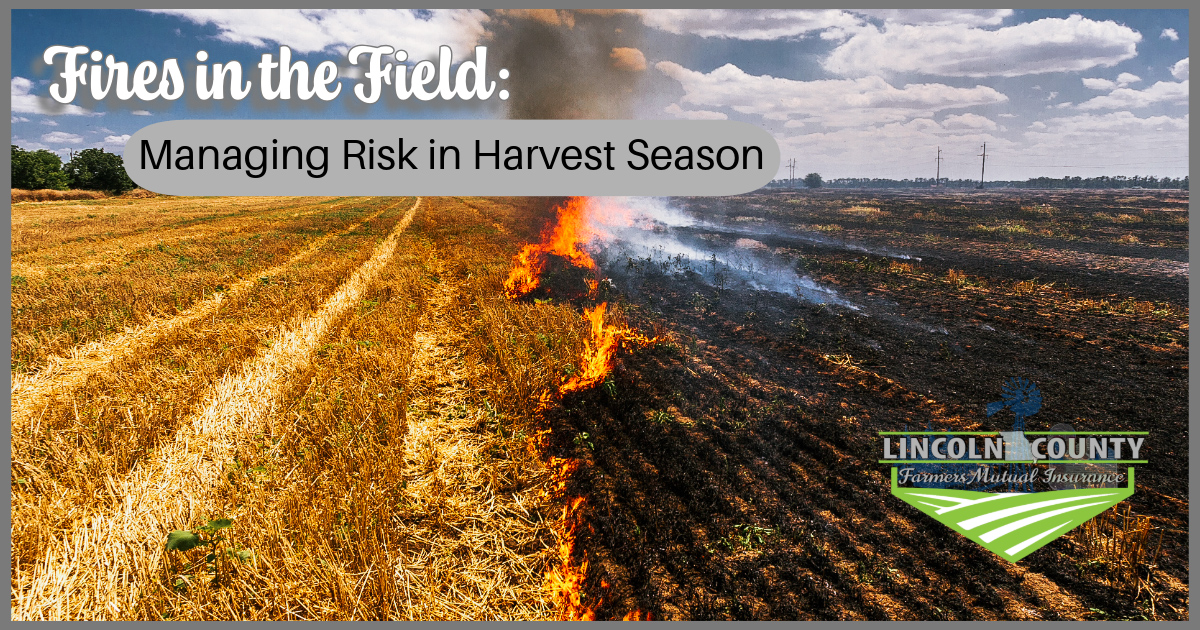
Harvest season brings long hours, dry crops, and hard work across Missouri’s farms. It also brings one of the highest-risk times of year for agricultural fires. Each fall, equipment fires, field fires, and storage fires account for significant property loss across the Midwest, often caused by conditions that seem harmless until they ignite.
October’s Fire Prevention Week reminds us that safety begins with awareness. On the farm, that means understanding how a single spark can spread across acres of dry stalks or debris. Whether you operate a small family farm or manage several hundred acres, knowing the warning signs of potential fire hazards is an important part of protecting your land, your equipment, and your livelihood.
Understanding Common Fire Risks
Hot machinery, friction, dust, and residue buildup can all lead to disaster if left unchecked. Combines and tractors are major sources of ignition during harvest. Engines run for hours under heavy load, and when crop dust, grease, or oil collect near heat sources, fire can start in seconds. Grain dryers also pose a serious threat when debris accumulates around burners or vents. Regular cleaning and inspection, particularly during peak harvest weeks, are essential.
Even small activities on the property such as burning brush piles or hosting fall bonfires should be managed with care. Check local fire conditions, maintain a water source nearby, and never leave a fire unattended. Dry conditions in Missouri can cause embers to travel far beyond the intended burn area.
Reducing Fire Risk on the Farm
Farm fire prevention starts with routine maintenance and awareness. A few key steps can dramatically lower the chance of ignition:
- Clean equipment daily to remove dust, chaff, and oil residue.
- Inspect fuel lines and electrical wiring for signs of wear.
- Keep fire extinguishers rated for farm use in combines, tractors, and trucks.
- Store fuel and lubricants safely away from heat or open flames.
- Avoid parking hot equipment on dry grass or stubble.
Grain storage areas deserve special attention as well. Heat buildup in bins can lead to smoldering grain or spontaneous combustion. Monitor moisture levels and ensure adequate aeration.
Encouraging the Next Generation of Safe Farmers
Youth organizations like Missouri 4-H and FFA are helping shape tomorrow’s farmers with strong foundations in agricultural safety and stewardship. Through hands-on learning, members gain an understanding of equipment safety, electrical awareness, and responsible fire management. Parents, advisors, and mentors can reinforce these lessons by involving youth in safe harvest routines and explaining why prevention measures matter.
Fire prevention is not only about protecting property, it is about protecting people. Every combine, tractor, and grain bin represents years of investment and effort. A few minutes spent on maintenance and preparation can save far more than equipment, it can safeguard entire livelihoods.
Rooted in Missouri Farms Since 1900
Lincoln County Farmers Mutual Insurance Company was founded by local farmers who understood that risk is a part of every season. More than a century later, that same sense of community continues to guide us. What began in Lincoln County has grown to serve families and farms throughout the state of Missouri, yet our purpose remains unchanged—to protect the homes, barns, crops, and livelihoods that define our communities.
Whether you live in town or work the fields, we take pride in standing beside our policyholders as both neighbors and partners. As harvest wraps up and the chill of winter sets in, we encourage every Missourian to review their coverage and stay prepared for whatever the next season brings.
Lincoln County Farmers Mutual Insurance Company
Serving policyholders across Missouri since 1900.
Small enough to know you, strong enough to serve you.